Weech: Hotels Must Adapt to Growing Cruise Tourism Amid Stayover Decline
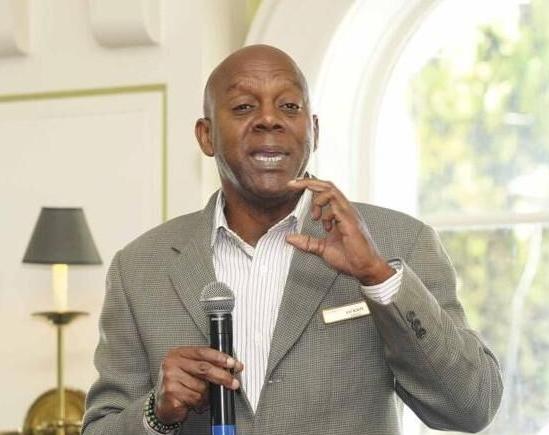
Bahamas Hotel and Tourism Association (BHTA) President Jackson Weech said at the BHTA’s recent annual general meeting, that hotels and other land-based tourism businesses must adapt to the reality of a growing cruise tourism sector amid stagnant or declining stayover numbers, and work together to ensure the tourism industry remains on track for sustained success.
The BHTA, in a release to Guardian Business, quoted Weech in his welcoming remarks, who said to tourism business owners and operators: “Though this year did not unfold as strongly as we had hoped, performance indices have helped clarify where our greatest opportunities lie, as we anticipate a robust festive season, and then move confidently into 2026.”
Weech further noted: “As it pertains to our declining stopover arrivals versus the double-digit growth of our cruise passenger numbers, the disparity is our reality, and it illustrates the heightened need for all of us to adapt, and to continue to work together to ensure our tourism industry, as a whole, is on track for sustained success; and that longstanding, land-based tourism businesses who were foundational to the birth and growth of tourism in The Bahamas over the past 50 years, are best able to meet and compete, on fair and level turf, with these new well-equipped, competitive players on the field”.
The BHTA’s AGM last week brought together almost one hundred public and private tourism sector stakeholders to take a look at how they fared in 2025, and to discuss future forecasts, and what steps should be taken to ensure a sustained, profitable, ascending trajectory for tourism growth and development for 2026.
Prime Minister Phillip Davis gave the keynote address, providing insights into the work being done by the government to support the tourism industry, including the execution of a comprehensive national aviation strategy, and the deployment an airport renaissance initiative aimed at enhancing airport infrastructure across the Family Islands and other important realized and anticipated undertakings.
Davis also challenged tourism business owners and operators to come to government with data, ideas and risk-sharing proposals, to deploy a measurable way to help repair what climate change has damaged. Davis committed his government’s “continued support in training and policy”, and indicated that “The government will stand with you, invest with you, and fight with you on the regional and global stage.”
Weech expressed gratitude for the efforts of the Ministry of Tourism, Investments and Aviation and its promotion board partners, who he said have strategically, creatively, with private sector input, worked tirelessly to ensure The Bahamas’ global marketing and promotional efforts are in constant motion.
“Your deliberate, focused efforts to attract new airlift, to strengthen and augment connectivity, visibility and accessibility from Canada, Europe, Central and South America and the US is bearing fruit, and we look forward to attaining the lift we need to sustain the growth and development of our tourism industry throughout 2026 and beyond.”
Weech also reminded attendees of the need to address “future headwinds” that can and have influenced the health and wellbeing of the tourism economy.
He also stressed the need to mitigate or eliminate “self-perpetuated headwinds including long-standing ails that impact the nation; and to support continued programs and initiatives designed to support and enhance our nation’s people, product and place.
Weech ended his speech with a strong message for tourism stakeholders, urging all partners to augment and enhance collaboration, communication, and partnership.
He stated: “The BHTA remains steadfast in our commitment to work closely, holistically, and productively with all sectors of government, and the private sector, to address threats to the success of our invaluable industry, and to achieve continued growth and development in a sustainable, inclusive manner.”
He continued: “We hope to expand our private-public sector partnership, and we respectively ask to be afforded the opportunity to sit at any table; alongside any government ministry, agency, or representative, when the public sector is contemplating and making determinations; be it legislative, procedural, or financial; that are impactful to tourism stakeholders who have spent decades in their respective businesses. In 2026, we will aim to collectively create a realistic strategy of enhanced cross-sectoral, all-inclusive engagement between the public and private sector to attain systematic, productive, timely, two-way communication when discussing topics of mutual interest and importance to our industry and the myriad of business owners, operators, employees, and entrepreneurs who operate in the tourism space, and whose livelihoods and way of life are derived from tourism.”
The Nassau Guardian
Youri Kemp
Published: December 10, 2025